
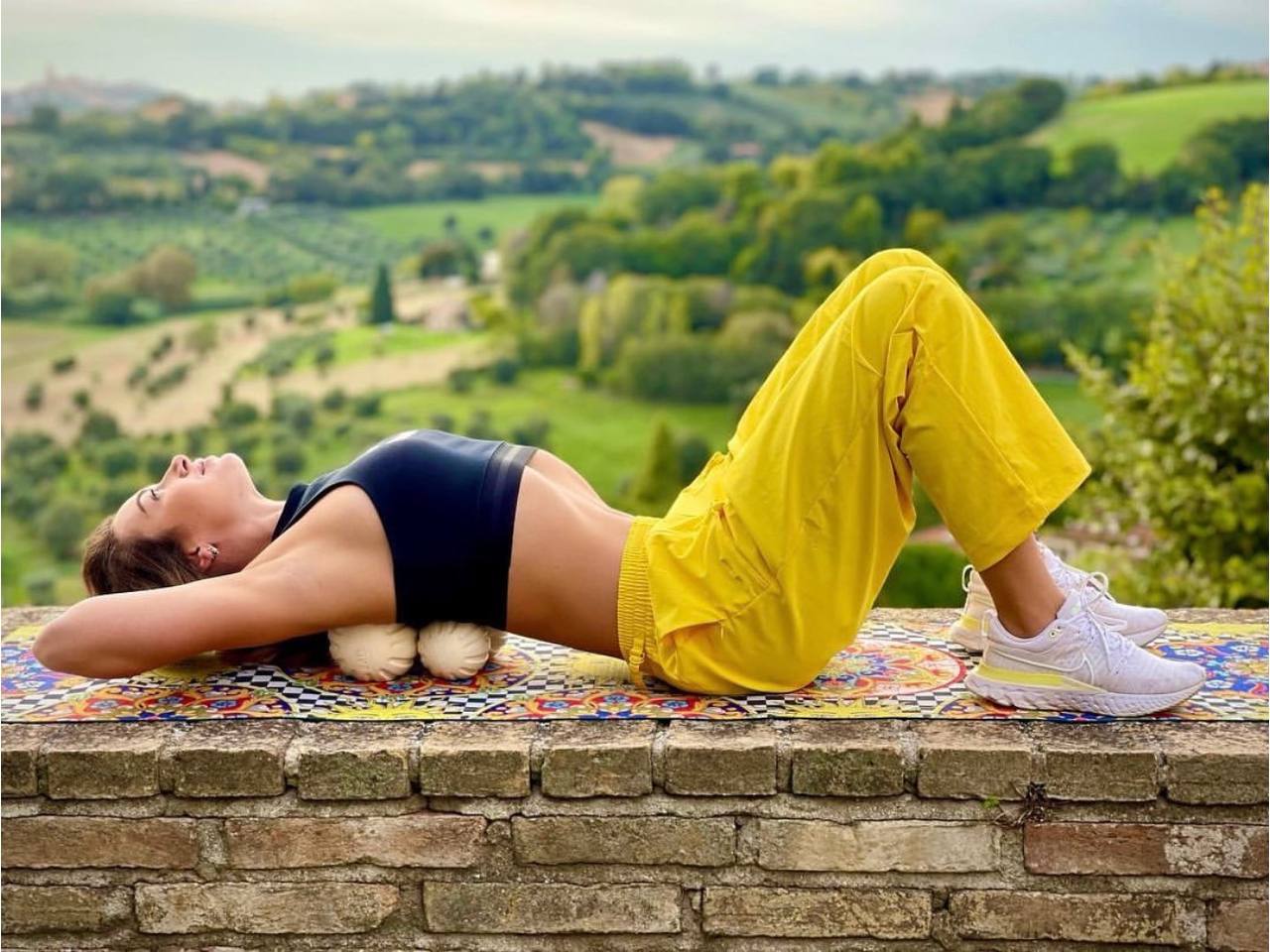
Less forcing, more awareness.
It is easy to think of posture as pulling the shoulders back or standing taller on command. In daily life, that approach is often hard to sustain. A more useful question is whether you can create a little more ease in the upper back and rib area while you are breathing, moving, and doing the things that matter to you.
This practice is built around short, guided sessions. It is not about achieving a perfect pose. It is about learning a position, exploring movement, and carrying that awareness into Pilates, strength training, walking, sport, and daily activity.
What consistent practice can help you notice
- The difference between holding yourself rigidly and finding a more natural, supported position
- How the upper back, shoulders, rib area, and breathing may feel during long periods of sitting or standing
- Ways to build a short movement ritual alongside Pilates, strength training, walking, or other routines you enjoy
- The value of returning to simple practice more often instead of relying on an occasional long session
Why start with the upper back and rib area?
Many daily habits take place in front of us: typing, driving, looking at a screen, cooking, carrying a bag, or caring for someone else. A supported, unhurried position can be a useful way to check in with the upper body after these patterns. The goal is not to change your body by force; it is to create room for more comfortable movement and better awareness.
A simple posture-focused practice
Begin with the basic supine guidance
Use the included instruction to choose a simple back-lying position. Start by getting comfortable and allow yourself time to settle before adding anything else.
Make the breath part of the routine
Notice your natural breath as you rest in the position. Avoid trying to make the chest rise more or to hold a particular posture; keep the rhythm easy.
Connect it to the movement you already do
Explore side-lying and other guided variations as the basic setup becomes familiar. Pair a short BALLance session with Pilates, strength, mobility, walking, or sport practice.
Use consistency as the measure
Give the process time. A brief session that fits naturally into your week is often more sustainable than a longer routine that feels like another obligation.